Two drinks can contain similar amounts of sugar and still make very different first impressions. One seems bright and crisp; another feels heavy or leaves a long finish. Calling both sweet loses the interesting part of the comparison. A short tasting note helps you describe what you actually enjoy and makes it easier to choose a drink for a particular occasion.
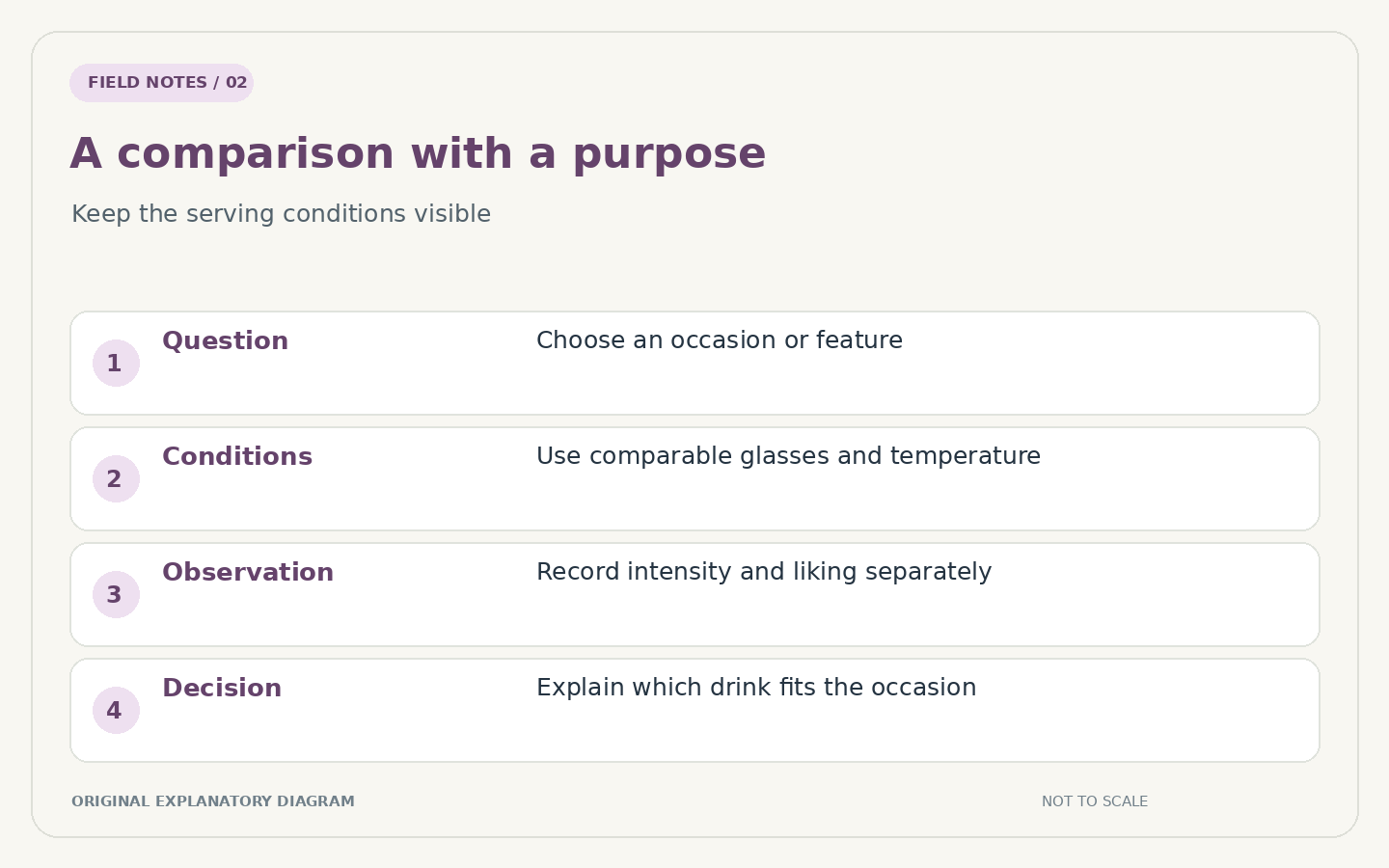
You do not need specialist glassware or a cupboard of reference ingredients. Begin with two familiar beverages, clean matching glasses and a question. Perhaps you want something that suits a savoury lunch or a drink whose flavour remains pleasant as it warms. A focused question keeps the exercise useful rather than turning a casual preference into an elaborate ranking ceremony.
Name the different parts of the experience
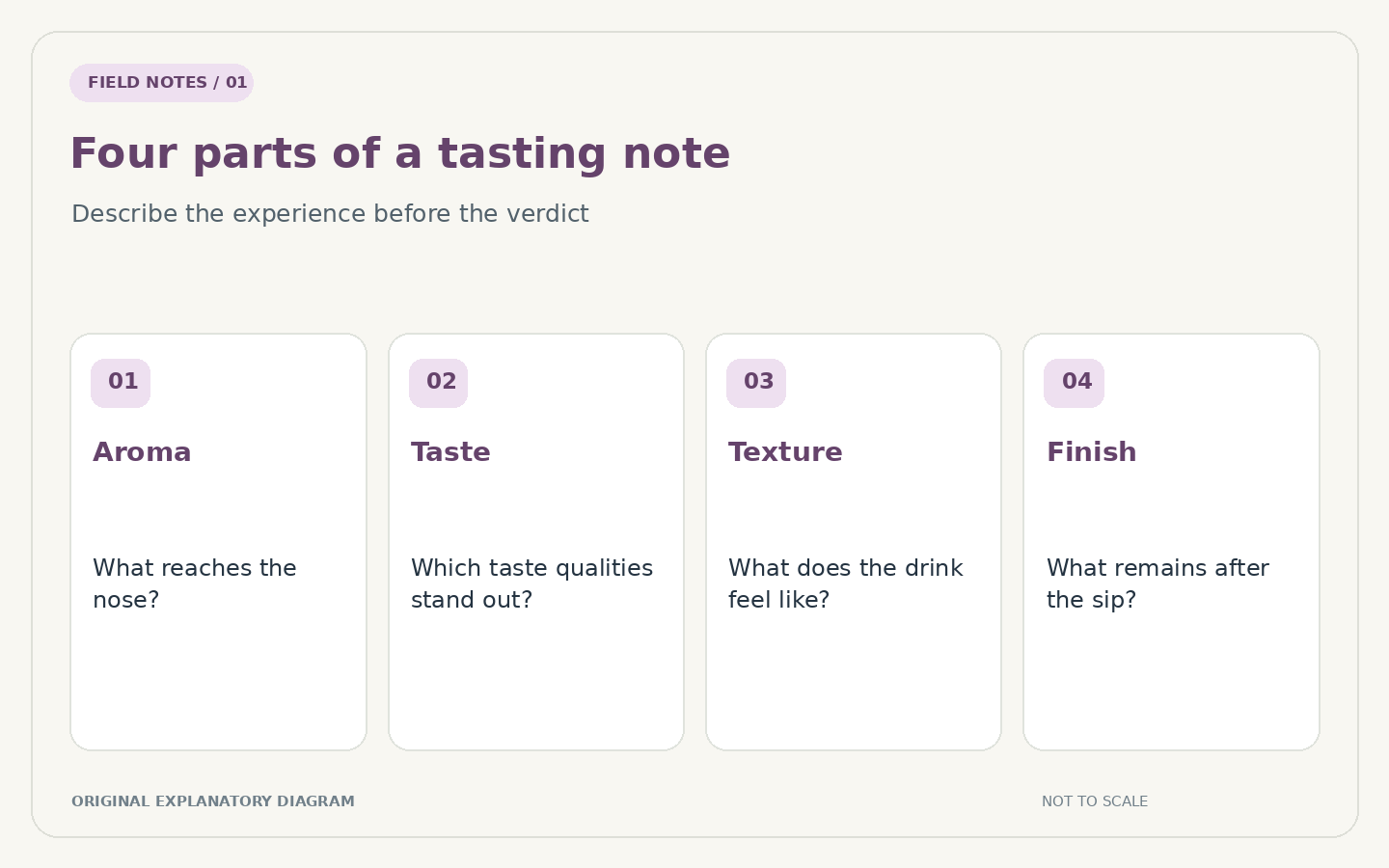
Taste, aroma and texture contribute different information. NIDCD explains that basic taste qualities combine with smell, temperature, texture and other chemical sensations to create flavour. A minty cooling sensation, a fruity aroma and sweetness therefore need not be the same feature of a drink. This gives you a practical vocabulary for separating an overall impression into understandable parts. [1]
Use four spaces on your page: aroma, taste, texture and finish. Write familiar descriptions before trying technical language. Lemon-like aroma, gentle sourness, lively bubbles and a lingering sweet finish communicate more than sophisticated alone. If you cannot name an aroma, describe its character or leave it uncertain. The point is to preserve your experience, not to demonstrate expertise through an impressive list of adjectives.
Choose a fair serving comparison
Use similar glasses and comparable serving temperatures when your question concerns the drinks themselves. If one sample comes straight from the refrigerator and another has been standing on a warm counter, you have changed more than the beverage. That may be an interesting comparison, but label it honestly so you remember what you actually compared.
Keep the samples modest and choose only drinks appropriate for the people tasting them. This is a flavour exercise, not a reason to consume several stimulant or supplement beverages together. Water and a pause between samples can make the sequence easier to manage. Decide in advance whether you are comparing a first sip, the experience with food or how the drink changes over time.
Describe intensity before judging liking
Give intensity and preference separate places in the note. You can find a drink strongly bitter and enjoy it, or mildly sweet and dislike its finish. Combining those judgments into one score makes it difficult to understand why you chose it. Start by naming the feature, then say whether it suits the occasion you have in mind.
A simple low, medium or high description is enough for a personal comparison. Define the terms by using them consistently within this tasting rather than pretending they are universal measurements. If you repeat the exercise later, bring back one familiar reference drink. That gives you a useful point of comparison without claiming that your kitchen has become a calibrated sensory laboratory.
Give the finish its own moment
The impression after swallowing may determine whether you want another sip. Notice which feature remains and whether your description changes after a short pause. You might initially register an aroma and later notice sweetness or a drying sensation. Record that sequence in words instead of compressing everything into the first instant.
Avoid assigning an ingredient as the cause unless you have evidence beyond the taste. A lingering note may suggest a question for the label, but tasting alone cannot identify every sweetener, acid or flavouring. Write what you noticed first, then keep any proposed explanation in a separate sentence. This preserves a useful observation even if your first guess about its cause turns out to be wrong.
Read the label on a comparable basis
FDA guidance explains that Nutrition Facts values are generally given per serving, while some packages also display whole-container information. A serving size describes a customary amount rather than a personal instruction about how much to drink. Check both the stated serving and the servings per container before comparing the numbers on two bottles. [2]
Put the label information beside your sensory note rather than using it to overwrite the note. A drink can taste less sweet to you without the label showing less sugar. The two records answer different questions: one reports composition in a defined amount, the other reports your experience under the conditions of the tasting. Keeping both visible helps you make a more informed choice.
Try the drink in its intended setting
A beverage selected for lunch should be considered alongside the food you expect to serve. A drink for a picnic also needs to work with the practicalities of transport, opening and sharing. Choose one setting and describe how the beverage fits it. This makes the final preference more useful than an abstract winner chosen without a purpose.
For a fictional example, a taster may prefer a tart drink alone but choose a milder one beside an already sharp salad. That does not invalidate either observation. It reveals that the decision depends on the whole eating experience. Keep the example descriptive and avoid turning a personal pairing into a rule about what everyone ought to enjoy with a particular dish.
Compare notes without forcing agreement
If other people join, ask everyone to write a first impression before discussing it. Then compare the descriptions. One person may focus on aroma while another notices texture, giving the group a richer account. Differences can be informative without requiring an argument about whose palate is correct or whose preference deserves more weight.
Ask a concrete follow-up when a word is unclear. Does smooth mean few bubbles, a thicker feel or a short finish? The answer can make the note much more useful. Keep individual preferences attached to their authors rather than averaging them into a single verdict. For choosing drinks for guests, knowing that preferences differ may be the most practical finding of the whole exercise.
Keep only the note you will use
Finish with a sentence naming the occasion, the feature you liked and any practical drawback. Suitable for a leisurely lunch, with a bright aroma but a finish I prefer in a smaller glass is a usable personal conclusion. It explains a decision and leaves room for it to change in another setting.
Save the product identity and the date with the note if you expect to revisit it. Formulations, packaging and your own preferences can change. There is no need to maintain an exhaustive beverage database. A few clear comparisons can help you choose more deliberately, describe a favourite to someone else and enjoy the details that a broad word such as sweet would otherwise conceal.
Sources
- Taste Disorders — National Institute on Deafness and Other Communication Disorders
- Serving Size on the Nutrition Facts Label — US Food and Drug Administration
Leave a Reply